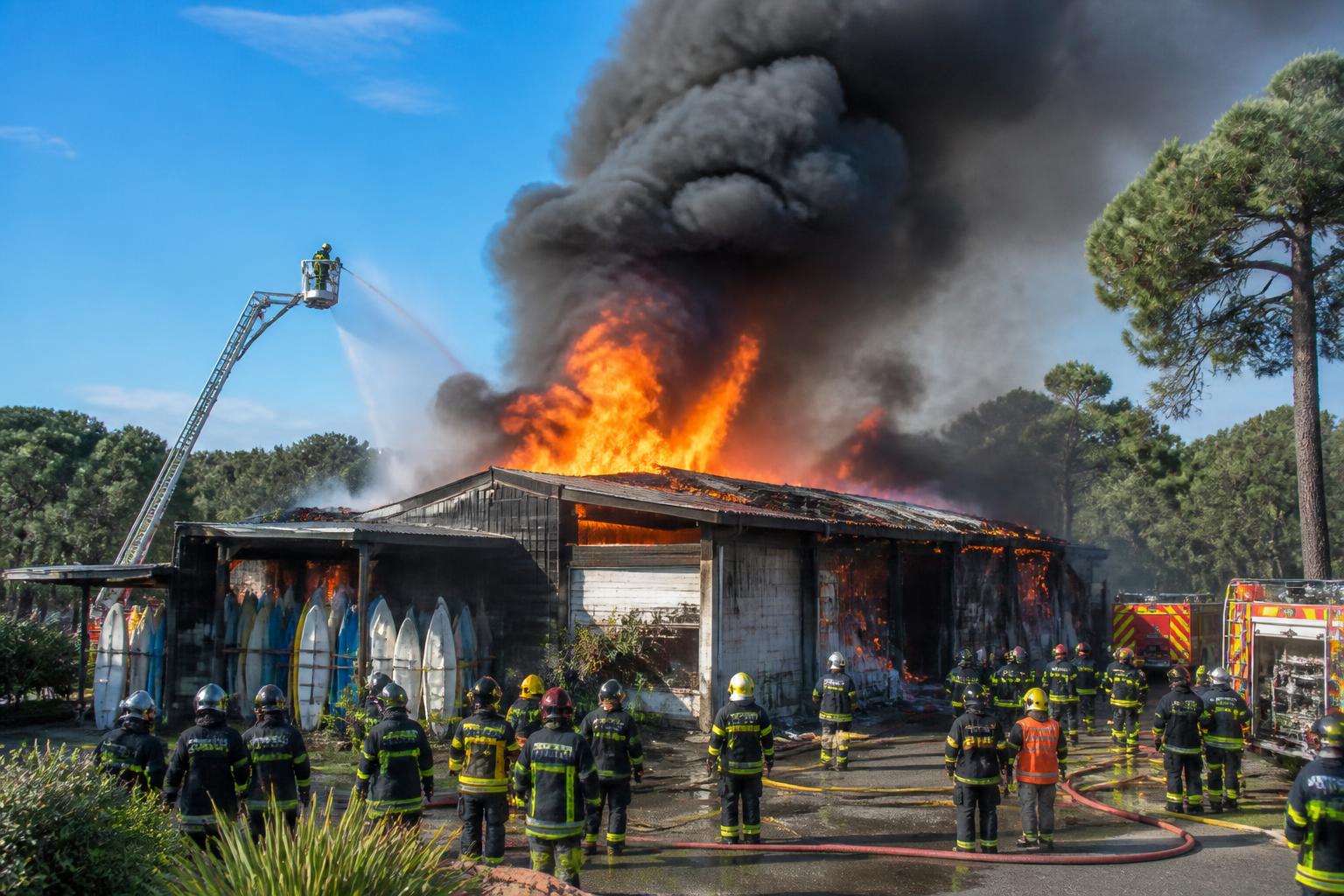
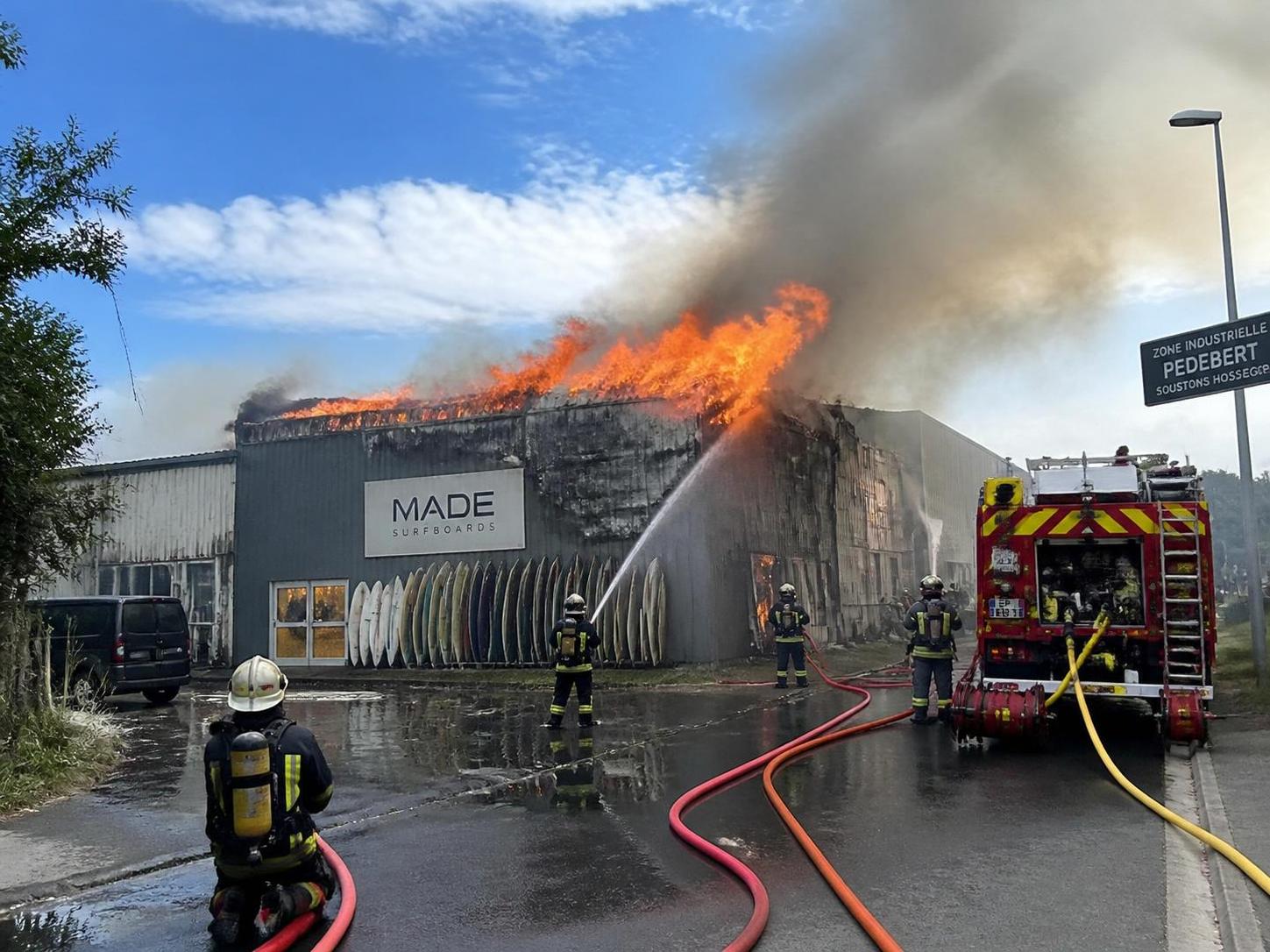
While the swell remained tame on Saturday, May 23, a very different kind of surge rocked the Pédebert area: a violent fire engulfed a surfboard factory, mobilizing nearly fifty firefighters from Landes to contain the blaze.
The fire, visible from the D652 exit ramp, was a reminder that even far from the break, the risk is real in workshops where resins and solvents are exposed to high temperatures. A fact-based look back at this event that shook Soorts-Hossegor.
Fire in Soorts-Hossegor: Landes firefighters respond swiftly
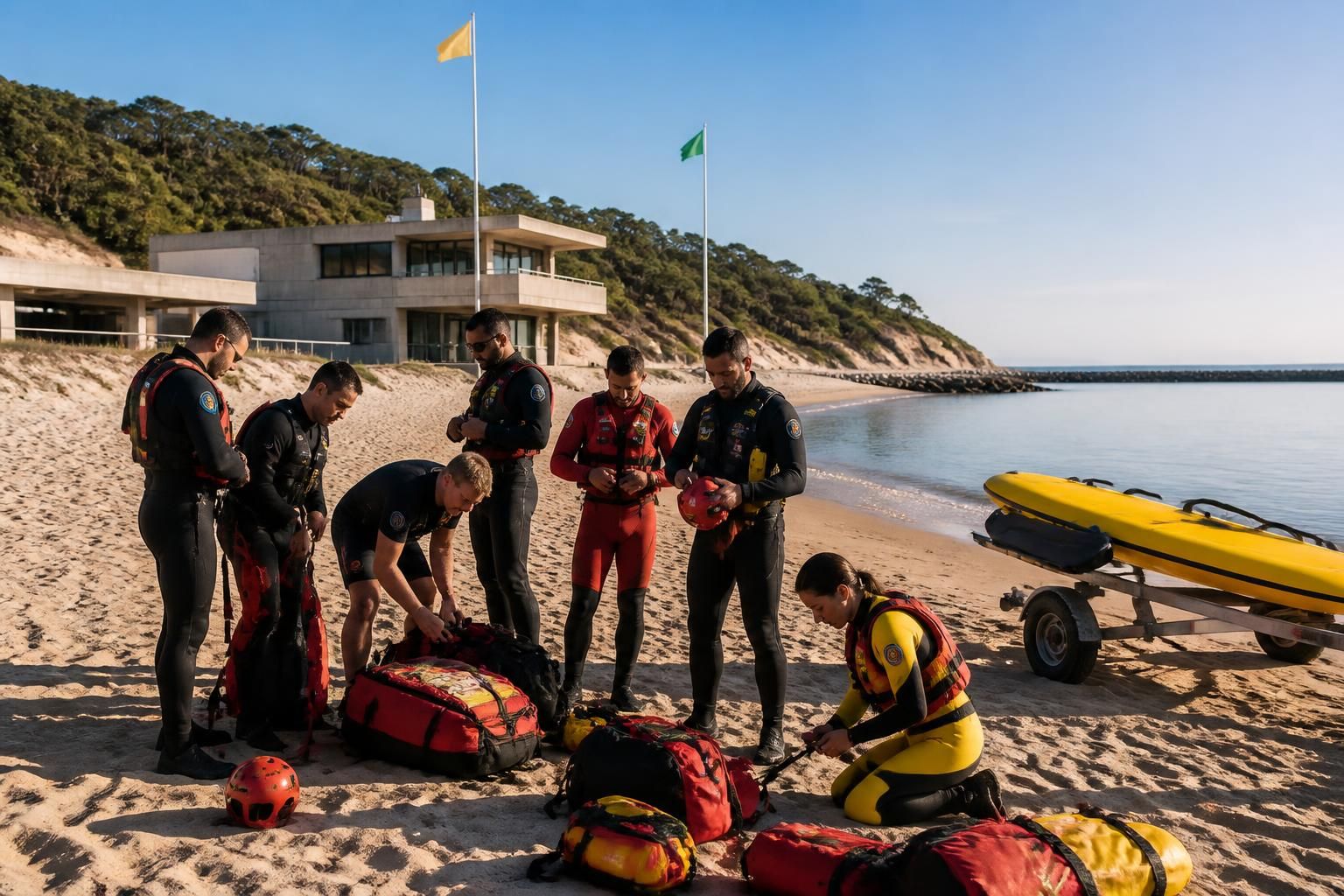
The fire alarm goes off at 11:28 a.m. Less than four minutes later, the first fire engine rumbles down Pau Llosa Lane. Twenty vehicles, including two ladder trucks and an advanced medical post, converge. The response involves 47 firefighters from the Capbreton, Seignosse, and Saint-Vincent-de-Tyrosse stations.
Timeline of the response: from the alert to cooling the resin fire sources
Thick black smoke pours from the sandwich roof, a sign that a polyester resin tank likely caught fire. Teams cut the power, deploy two foam lines, and advance wearing SCBA. By 12:07 p.m., the main fire front is contained; at 1:45 p.m., the stripping phase begins to prevent any rekindling.
Why shaping workshops are particularly vulnerable
Fiberglass, foam blanks, and catalyzed solvents make for a highly flammable cocktail. A single spark is enough to trigger a flash fire reaching 1,000°C. Standard dry-chemical extinguishers are quickly overwhelmed; only emulsifying foam, used yesterday, truly suppresses the vapors.
- Solvents stored less than three meters from a sanding area
- Lack of approved safety cabinets for peroxides
- Extraction systems undersized for PU dust
- Presence of pressurized gas cylinders for UV glassing
Since 2024, the SDIS 40 prevention unit has stepped up inspection visits. Several workshops, including the one affected, had already been made aware of the risks. For those seeking greener alternatives to chemical shaping, the guide published on sustainable initiatives in Landes offers practical options.
Human and material toll: three minor cases of smoke inhalation, a stock gone up in smoke
Three employees, slightly affected by the smoke, were taken to Dax Hospital. In terms of equipment, nearly 1,200 EPS blanks and a thousand carbon fins did not survive. Below are the key figures compiled by the fire command post.
| Measured item | Value | Source |
|---|---|---|
| Number of firefighters firefighters | 47 responders | SDIS 40 |
| Duration of the response | 2 hr 17 min | Command post timer |
| Area destroyed | 1,800 m² | Preliminary assessments |
| Est. material losses | €1.4M | Insurer |
The collective of local shapers is already preparing a fundraising campaign. Neighboring workshops, less affected, have offered to temporarily host production, proving that solidarity still rides like a longboard on a glassy summer day. A recovery schedule will be published as soon as it is approved by the insurers and health authorities; follow it via the municipal newsletter.
What are the likely causes of this fire?
Initial findings point to a hot spot in the polyester resin curing area. The investigation will need to determine whether an electrical fault or an uncontrolled exothermic reaction was responsible.
Will the factory’s production be relocated?
Yes, several partner shaping rooms say they are ready to temporarily accommodate the workforce and essential small tools during the reconstruction.
How can local residents limit future risks?
Report any smoke outbreak to 112, comply with parking restrictions on red alert days, and take part in awareness sessions organized by the SDIS.
Will boards that have already been ordered be delivered?
The manufacturer is committed to fulfilling pre-orders through a network of independent shapers. Lead times are expected to increase by two to three weeks depending on the models.