In the surf industry, paradoxes lap around just as fiercely as the sets at La Gravière on a stormy morning. Between dreams of authenticity and waves of greenwashing, the surf business has been causing plenty of friction for several seasons now. While Rip Curl, Quiksilver, Billabong, and Oxbow heavily tap into the imagery of wild freedom through branding, reality reveals an industry caught in a web of contradictions: environmental ambitions vs. intensive production, the spirit of adventure vs. the excessive industrialization of surf spots, surf spirit vs. the big money of surf parks. And surfing’s entry into the Olympics has only fueled the debate between surfing purists and new followers drawn in by the hype. A no-holds-barred dive into the crosscurrents of a world as captivating as it is ambivalent.
Industrial surfing and lost authenticity: a constant balancing act
Surfing made in France long cultivated a laid-back, rootsy image, but in 2025, the vibe is clearly more mixed. Brands like Volcom, Hurley, Element, Vissla, and Roxy hold a prominent place in surf culture, flooding the market with stylish products that sometimes have little left to do with the original feeling of freedom.
Yet as surfers flock to the line-ups, overconsumption of gear and collections that change every season clash with declarations of love for the ocean. Flashy PU/epoxy boards and gear shipped in from afar reveal a harsh truth: the surf industry is worth several billion dollars and operates above all as a globalized business.
- Global distribution : Quiksilver and Billabong franchises dominate retail in even the most remote corners of the coastline.
- Eco standards : “Green” certifications try to reassure consumers, but the supply chain still runs on fossil fuels.
- Standardization : At surf spots, clothing and accessories all look alike; the local spirit sometimes seems swallowed up by the branding steamroller.
| Brands | Market capture | Environmental commitment |
|---|---|---|
| Rip Curl | Global top 3 | Recycled materials (partial) |
| Billabong | Multinational | Limited |
| Oxbow | A benchmark in France | Local initiatives |
| Vissla | Rapid growth | Alternative materials promoted |
The disconnect between marketing innovation and values of freedom remains the first shockwave for the core community. And some miss the atmosphere of the cabins beneath the pines, where sharing came before the Instagram content strategy.
Greenwashing or real transformation? Eco-responsibility in the shorebreak
The surf world and big environmental talk: a solid case… or passing foam? Faced with the climate emergency, the big names in surfing, from Picture Organic Clothing to Hurley, are multiplying announcements of bio-based neoprene wetsuits, greener boards, and recycled packaging. But the sector’s carbon footprint remains huge, weighed down by:
- Long-haul travel by plane to chase the perfect swell.
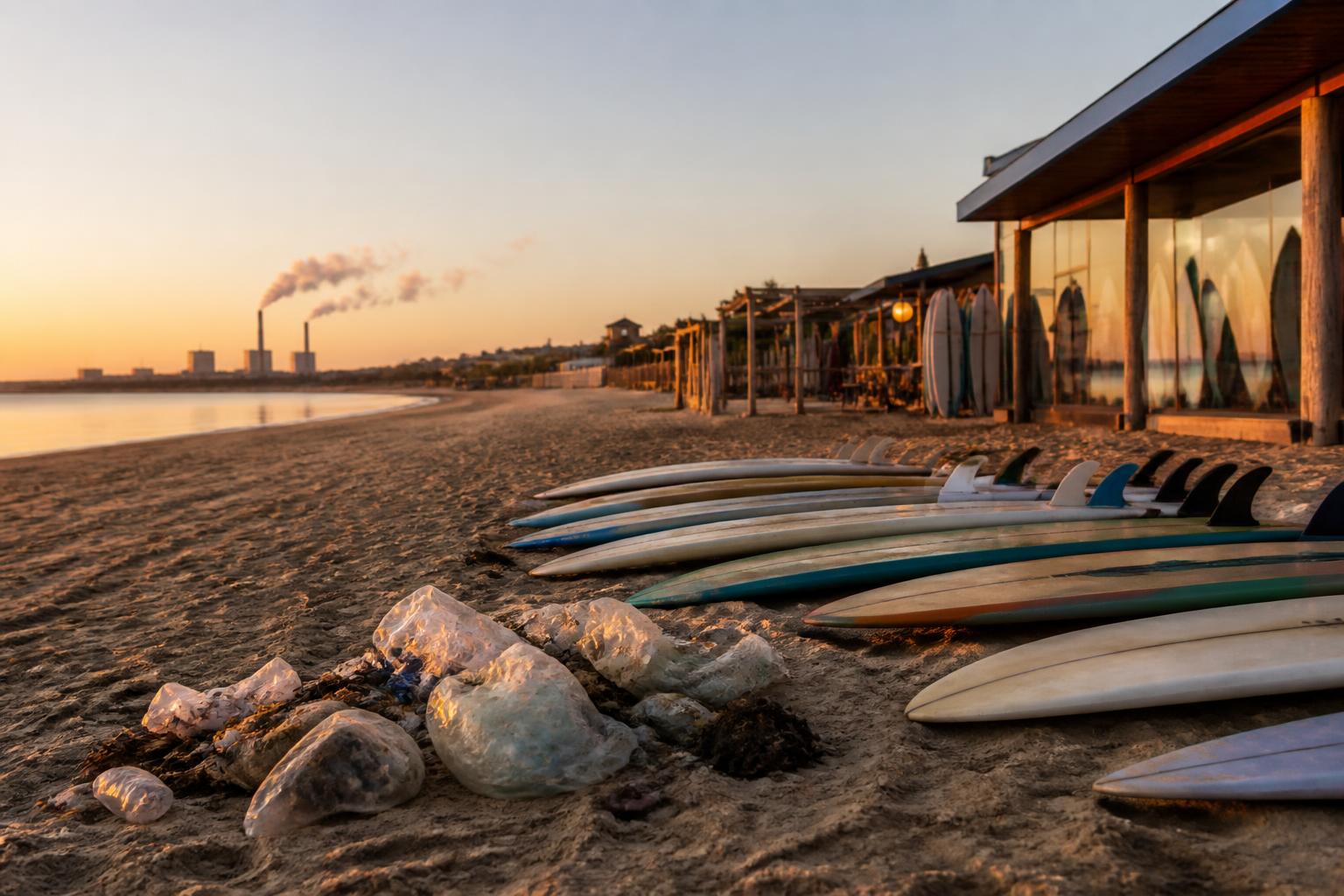
- Production of boards and wetsuits highly polluting (resins, foams, solvents).
- Energy-intensive surf parks pushing things to the opposite extreme of the original ethos.
In practice, while Oxbow and Roxy are highlighting more responsible ranges, the sector is still struggling to reduce its true impact. Conversely, the rise of collectives such as “No to Surfing in a Box” shows that the debate over the legitimacy of artificial waves is shaking up the ecosystem.
| Item | Environmental Impact | Corrective action |
|---|---|---|
| PU/Epoxy board | High | Recycled boards (Picture Organic Clothing) |
| Surf travel | Very high | Carbon offsetting (local projects) |
| Textiles | Medium | Recycled/eco-designed fibers |
For some riders, eco-anxiety is reaching the line-up. In 2025, are we capable of combining surf trips with respect for the ocean, or are we still caught between two waters?
The rise of surf parks: controlled spots or the end of free surfing?
Surf parks are popping up like mushrooms on concrete. For the industry, these high-tech pools are a gold mine: adjustable wave settings, perfect weather, no tides to watch. But at what cost to surf culture?
- Energy consumption : Artificial waves require significant electrical power.
- Standardization of the ride : Less surprise, less connection with the elements.
- Accessibility vs. spirituality : More riders, but the ocean session loses its sacred character.
The concept appeals to brands and a new customer base, but riles purists who see their trip turned into a standardized leisure activity. A sanitized form of surfing, with Billabong setting up next to a food truck area rather than at the shaper’s workshop.
Surfing at the Olympics and the dilution of surf spirit
Its inclusion in the Olympic program has given the discipline a real boost. On one hand, there is worldwide recognition and an explosion in licensed members. On the other, some old-timers fear that surfing will be sucked into the pursuit of medals, losing some of its rebellious and adventurous side.
- Greater professionalization : Coaches and sponsors (Rip Curl, Volcom, Roxy) are rubbing their hands together.
- Global visibility : Picture Organic Clothing and Hurley are soaring on social media.
- A question of values : The carefree spirit of shared sessions gives way to strategy, scoring, and the pressure to perform.
| Aspect | Impact on surfing |
|---|---|
| Olympism | Greater visibility, but a risk of global homogenization |
| Equipment market | Sales boom, but pressure on the ethical quality of gear |
Surfing is evolving, but the flavor of wild free surfing remains intact for those who still know how to slip into the morning mist before the crowds. Between visibility, business, and the salty taste of adventure, everyone draws their own lines in the foam.
The underlying wave: toward a new balance for the surf industry?
A wind of change is sweeping through the Côte Landaise and far beyond. Between activist collectives, eco-conscious surf trips, and young shapers redefining gear, a spirit of resilience is permeating the world of surfing. Local initiatives, the creation of “green” events sponsored by Vissla or Picture Organic Clothing, and the rise of new networks are strengthening the momentum.
- Clean-up events : Waste collection and awareness-raising in collaboration with Element.
- Low-impact board ranges : Innovation from shapers and independents.
- Slow sessions : A return to a contemplative approach, far from competition.
Riding thus becomes an act of commitment, on shifting boundaries between pure pleasure and engagement with nature. Far from causing anyone to lose their footing, these contradictions continue to fuel the consuming passion that binds every surfer to the ocean.
Frequently asked questions about the paradoxes of the surf industry
What are the main brands shaping the surf industry today?
- Major brands include Rip Curl, Quiksilver, Billabong, Oxbow, Roxy, Volcom, Element, Hurley, Vissla, and Picture Organic Clothing. Each contributes to surf culture but has different environmental initiatives.
Is the surf industry truly committed to the ecological transition?
- Progress is being made, but board production, the use of polluting materials, and travel remain major dark spots despite initiatives such as recycling and eco-design.
Are surf parks compatible with surfing’s original philosophy?
- The debate is heated: surf parks make the sport more accessible but, for some, they distance it from its wild connection to the ocean and symbolize the commercialization of surfing.
Why are there so many surf brands in urban fashion?
- Rip Curl, Quiksilver, Billabong, and their younger siblings have ridden the streetwear wave, appealing even to those who have never played in the foam.
Can surfing remain authentic in the age of globalization and sports business?
- Despite commercial pressure, a segment of the community continues to defend surfing’s original soul through alternative practices, mindful consumption, and genuine environmental commitment.