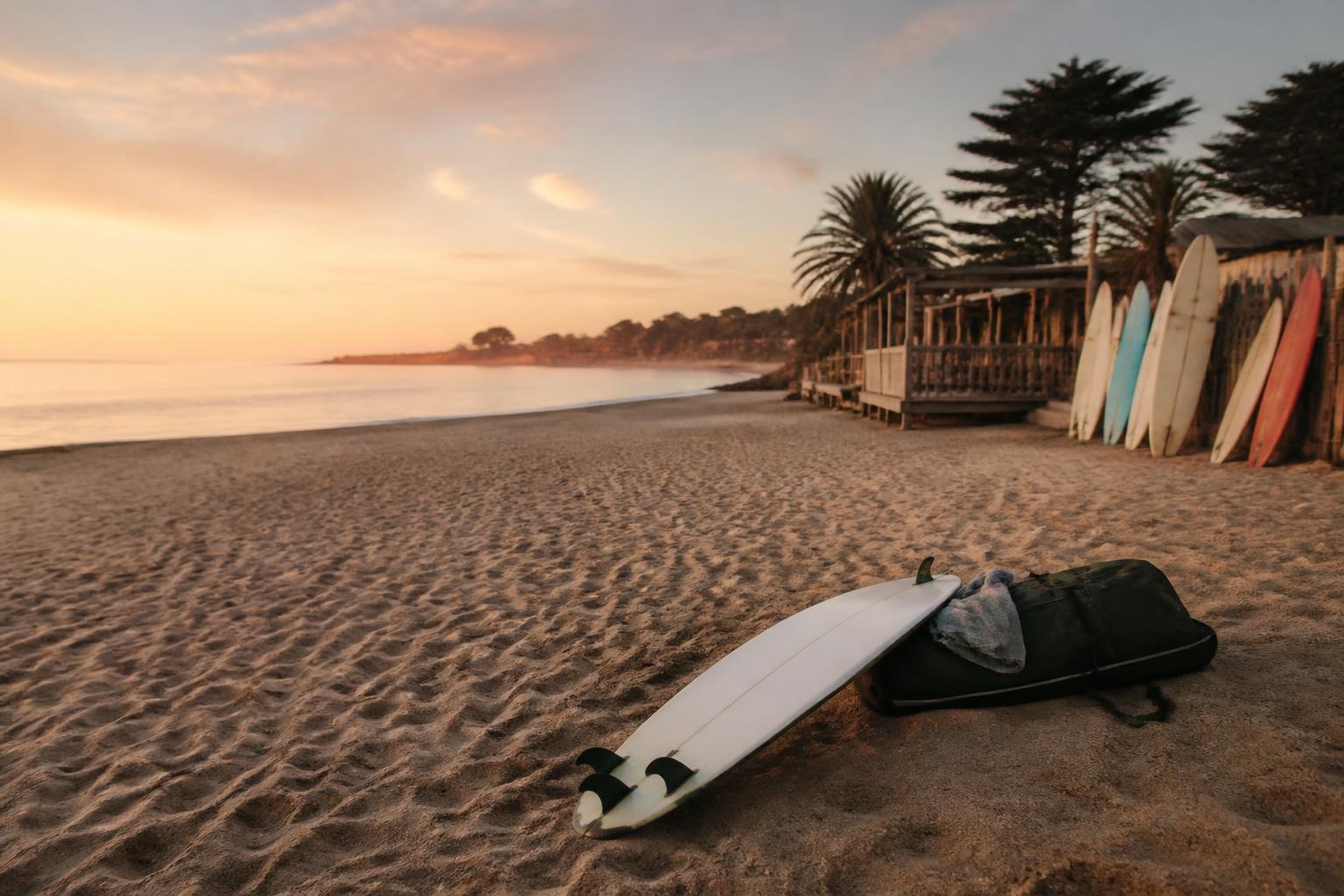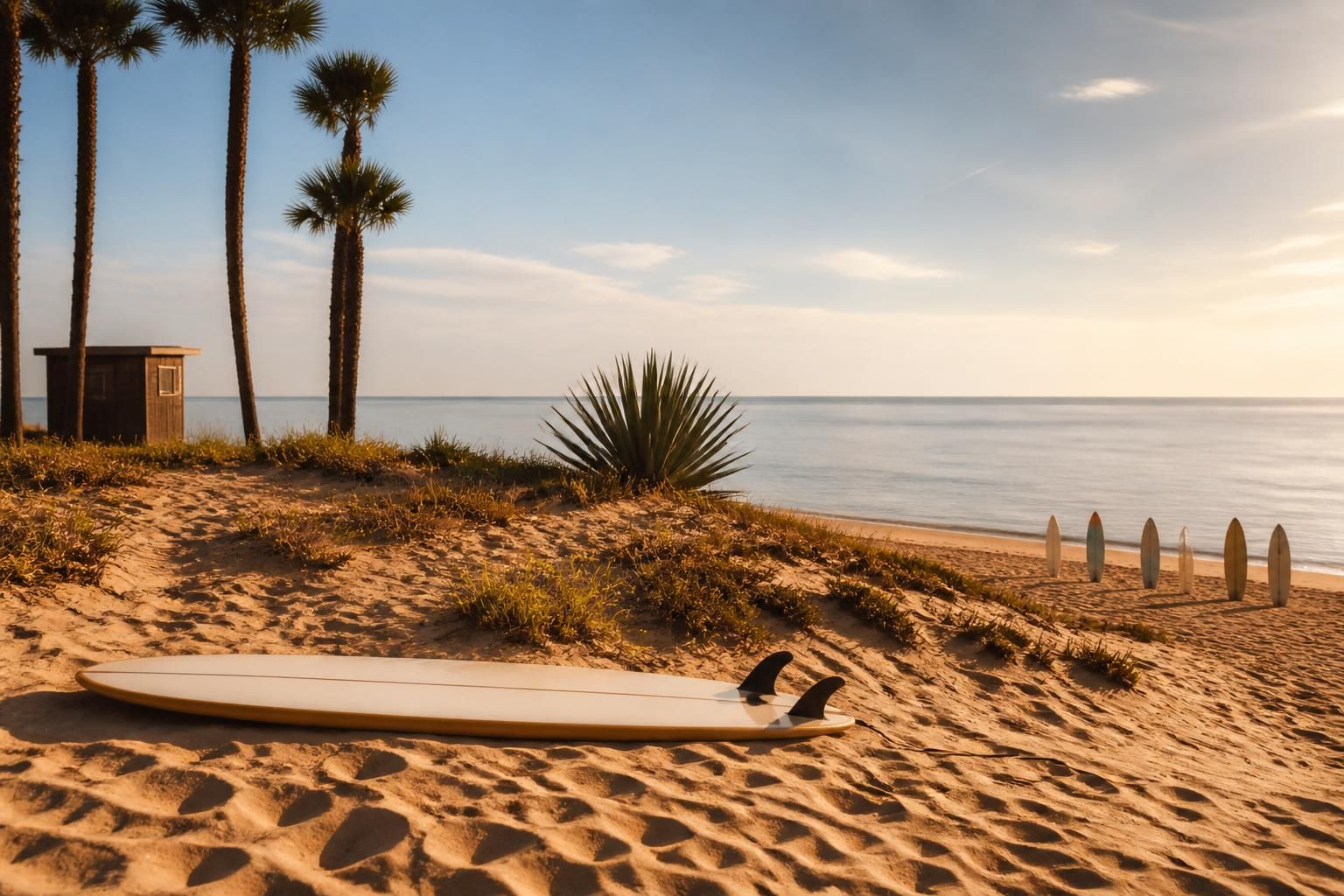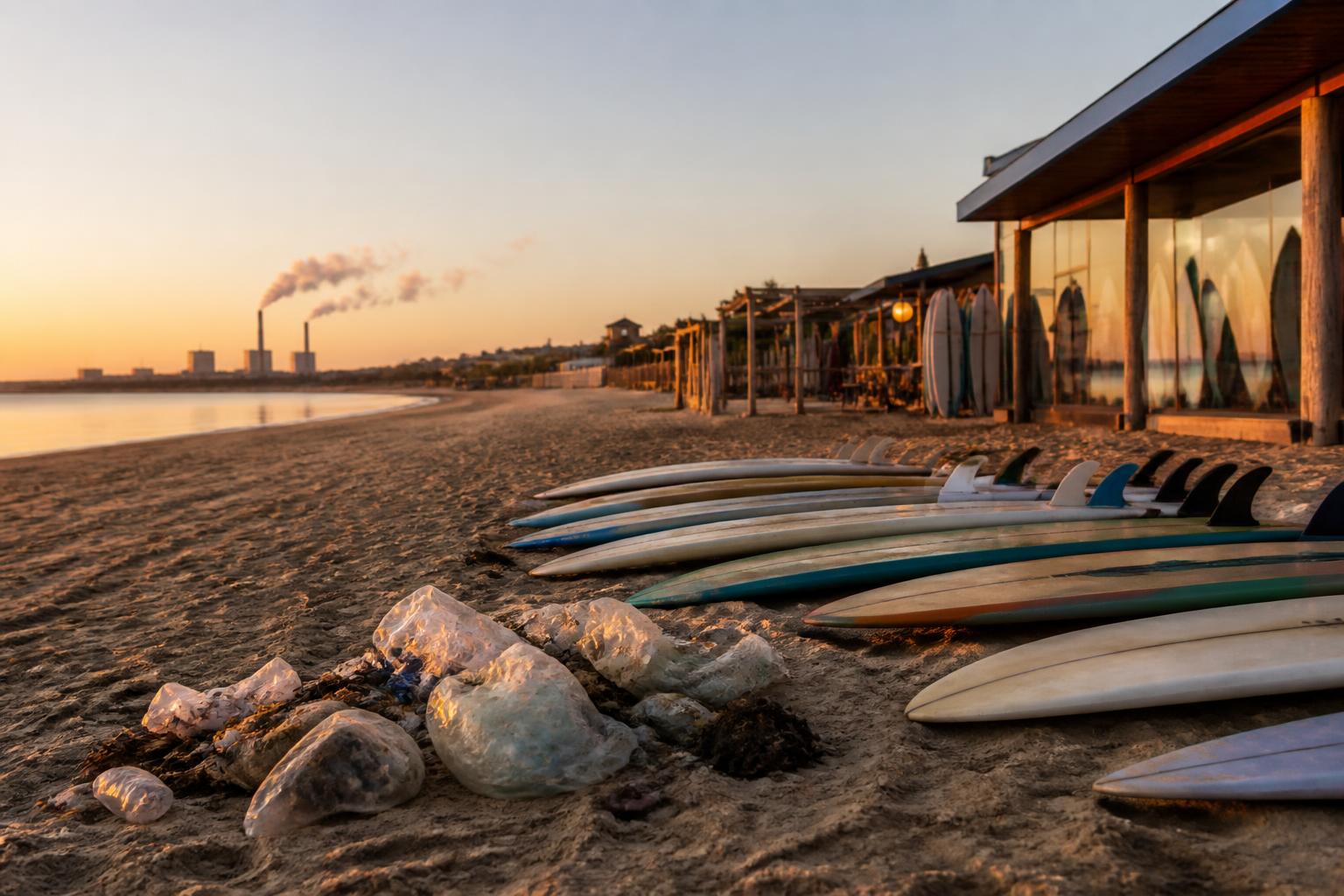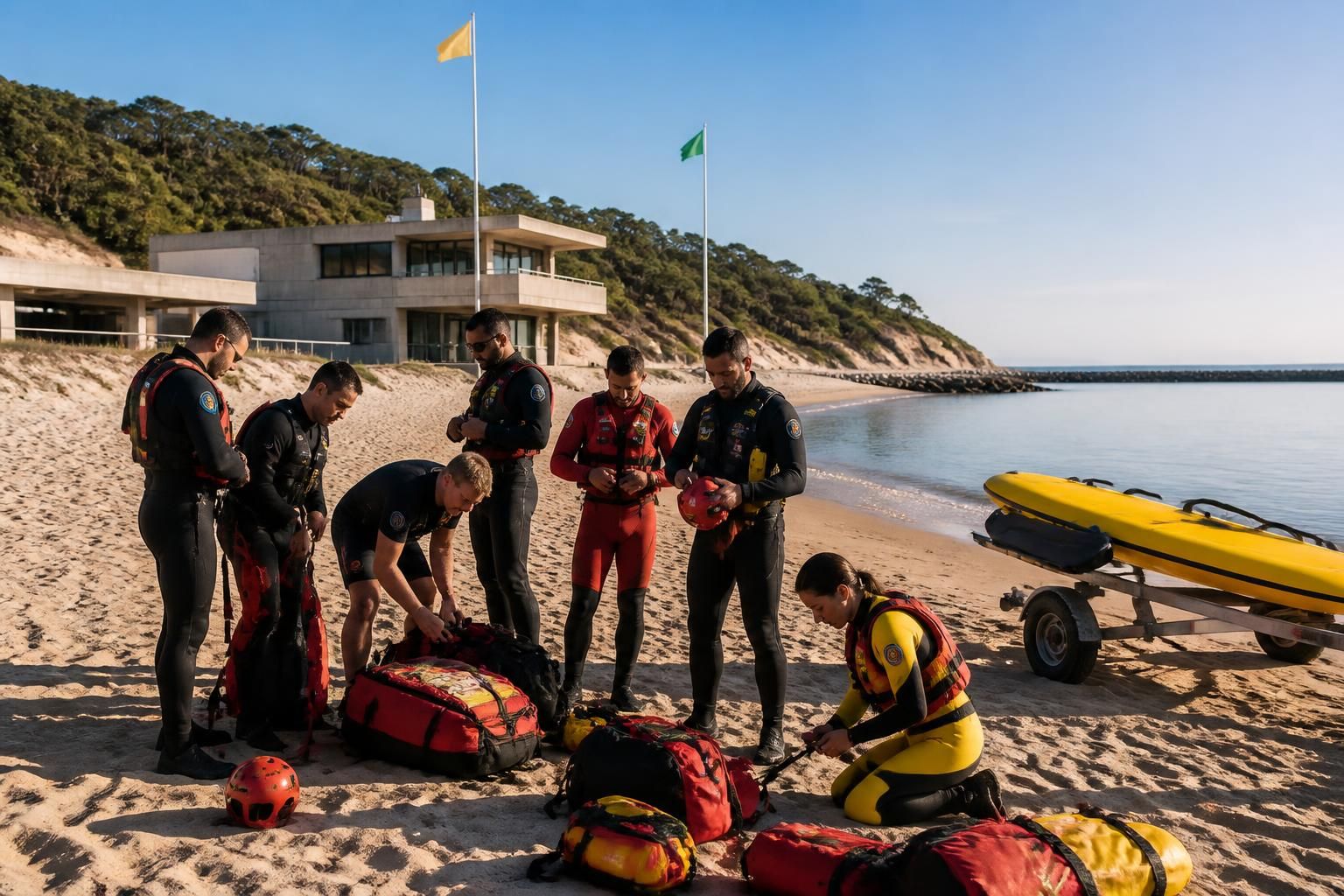
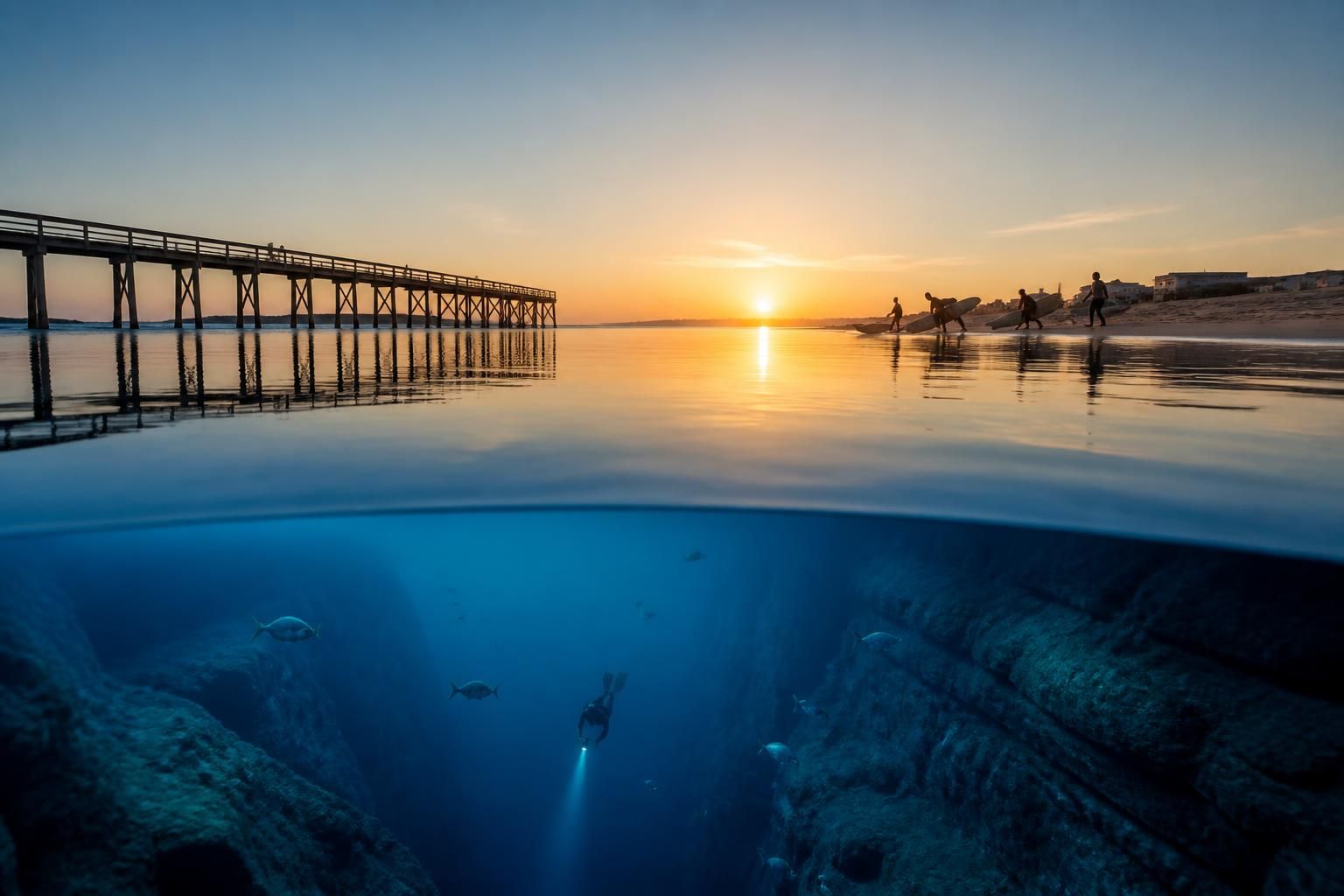
No more waiting at the spot: the live camera in Capbreton captures every set, every swell refraction and even harbor activity in real-time video. Everything you need to fine-tune your timing and avoid missed sessions.
Live camera: check the Landes swell before waxing your board
Installed on the roof of the SNSM station, the 4K lens scans the beach from Santocha to La Piste. Facing due west, with a 270° sweep and auto-zoom on the channel: the perfect combo for anticipating the period and chop before heading to the peak. Data cross-checked with the detailed surf report confirm that the system is reliable: less than 0.5 s of latency from the port’s fiber link.
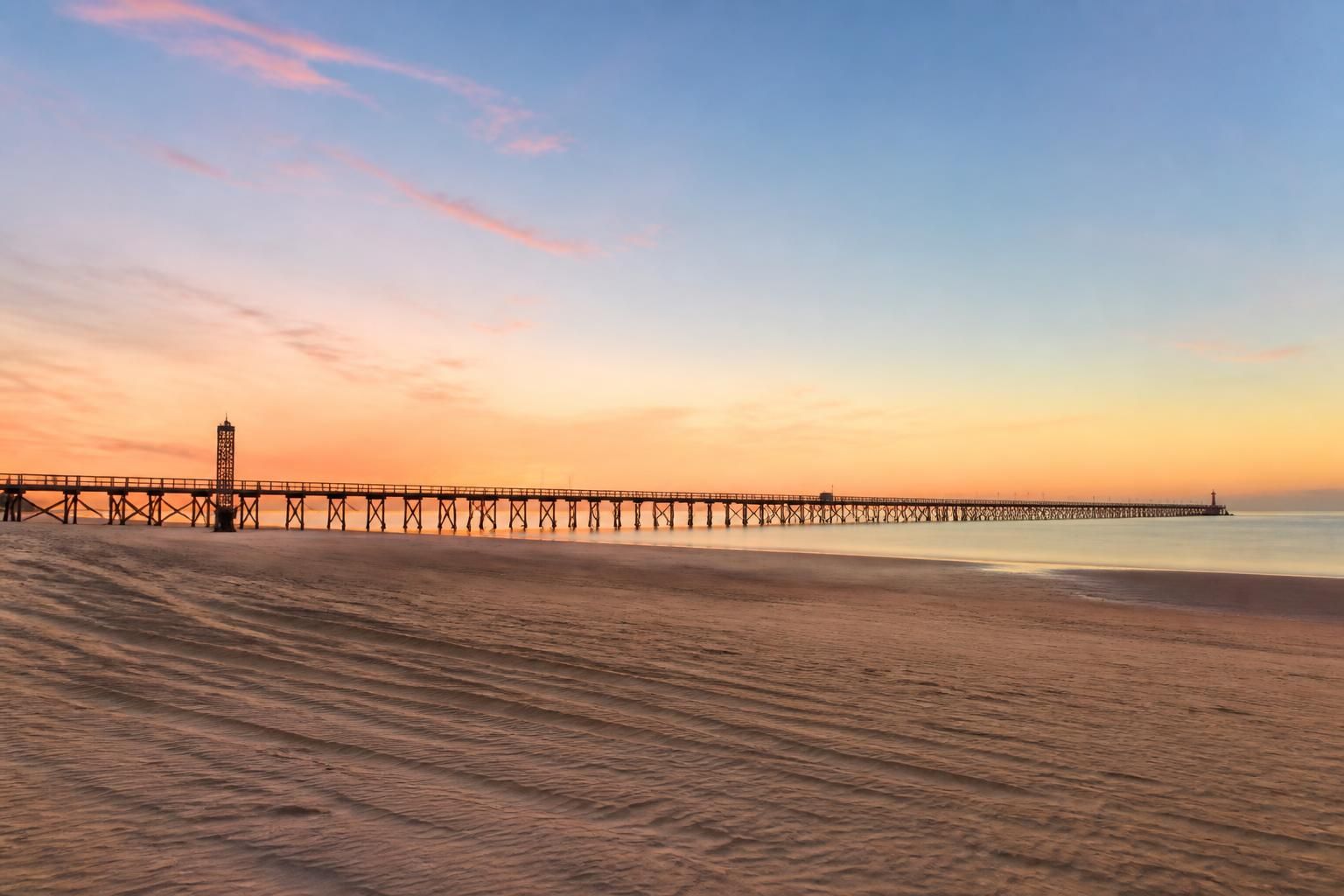
Historic pier: a precise landmark for getting in the water
Built in 1870, the 189 m pier acts as a natural marker: if the mist reaches beyond the third streetlamp, the offshore wind is still holding. The live camera is aligned with this landmark, offering an instant view of the North-side bowl. A must for regulars chasing the morning glassy conditions.
The secondary angle shows the harbor area, handy for gauging the height of the bar before entering the channel. Local fishers also watch the current there, proof that tech benefits the entire ocean tribe.
Exploring the underwater Gouf: a 4,500 m canyon beneath your board
Capbreton’s invisible star remains the underwater Gouf, an abyssal trench dropping 4,500 m below the surface, comparable to the Grand Canyon, Atlantic Ocean version. The new bathymetric buoys, deployed during the “Immersion 2025” campaign, now transmit live readings integrated into the video feed. A pure exploration tool for understanding how the XXL swells that hit La Nord are born.
This data also feeds the regional coastal monitoring system, linked to storm-surge alerts. Riders are already planning lightning-fast tow-in sessions thanks to this underwater monitoring.
Quick checklist: getting the most out of the webcam
- Check the golden hour: the best contrast for spotting subtle sets.
- Compare the angle of the weather buoy’s jet with the forecast wind direction.
- Watch the color of the foam to detect any harbor outflow.
- Note the frequency of sets over 10 minutes, not just their size.
- Switch to the harbor view to estimate the height of the residual swell.
By combining these points with the swell alerts published on the regional platform, decision-making becomes almost scientific.
Table of camera angles and optimal orientation
| Camera viewpoint | Field of view (°) | Ideal wind | Wave visibility quality |
|---|---|---|---|
| Santocha North | 90 | NE | Excellent |
| La Piste South | 110 | E | Good |
| Channel-Port | 70 | N | Average |
| Central pier | 60 | SE | Very good |
This table compiles feedback from local instructors and metadata extracted from the live video. A reminder to keep under your pad before each session.
Ocean immersion and surf culture: more than just a live stream
Beyond the morning check, the feed fuels the archives of the nearby surf camp. Trainees analyze their takeoffs, while scientists cross-reference these images with surveys of the seabed. An unprecedented convergence of performance and research that propels Capbreton as a tech hub for the Atlantic Ocean.
How to access the live Capbreton camera for free?
The stream is hosted on a public server funded by the municipality; simply connect to the port’s official website or via the Surf Cap360 mobile app.
Does 4K quality affect data usage?
Yes: a 4K stream uses around 7 GB per hour. Enable adaptive resolution if you are viewing from a mobile network.
Can images be downloaded to analyze your session?
The last 24 hours are archived in the cloud; a free account lets you extract 30-second clips with timestamps.
Does the underwater Gouf really influence wave size?
Yes: the canyon channels ocean energy and concentrates the swell in a limited area, generating hollower peaks and sometimes a 30% increase in height compared with neighboring sandbanks.
Can the camera withstand winter storms?
The IP68 housing, tested at 200 km/h in a wind tunnel, is heated to prevent condensation and anchored to a shock-absorbing mast, ensuring 98% uptime even during January gales.